A
protein is made through a very complicated process. First of all, the
DNA gets copied, and that copy is called an
RNA. The
mRNA then leaves the nucleus, and heads over to the cytoplasm. The mRNA specifically goes to the
ribosomes, the ribosomes reads groups of three bases. These groups of three bases are called
sequences. Then DNA Polymerase goes around determining the proper amino acid for the codon. Once the process is finished, it all folds up to become a protein!
https://upload.wikimedia.org/wikipedia/commons/thumb/b/b1/Ribosome_mRNA_translation_en.svg/2000px-Ribosome_mRNA_translation_en.svg.png
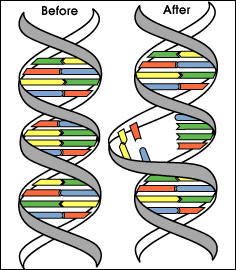
When you think about buying things, you always have that chance of getting a factory defect. That is why many companies have warranties, so they fix a defective product! This happens with making proteins too, but it is actually called a
mutation. The three different types of
mutations are
insertion,
deletion, and
substitution. It seems as though
substitution is the least effective
mutation because it only affects one
sequence. Remember that a
sequence is a combination of three base letters.
Deletion and
insertion can be huge problems to the
protein, especially if they are at the start of the RNA/DNA strand.
https://www.biostat.wisc.edu/~kendzior/MADGiC/dna-mutation-graphic.jpg
For the mutation of my choice, I used
substitution. I chose
substitution because I knew that it wouldn't greatly affect the DNA strand. It only changed one
sequence, and it wouldn't make a difference where the
mutation was located.
http://image.ohmynews.com/down/images/1/todd_231510_1[323095].gif
Proteins are essential to life, so it isn't optimal to have a mutation. A mutation could make oxygen travel in much less quantities in your blood. There are also mutations that stop the blood from clotting very easily. Blood needs to clot in order to stop bleeding, so bruises can be a very bad thing. I looked at a mutation that was the complete opposite of this, and it is called Thrombophilia. This is when the blood has an increased tendency to clot. Blood clots in your veins are very dangerous. My Mom actually had one, and it isn't anything to mess around with. A blood clot in your veins can travel around your body. It can go to your lungs, brain, or heart. There is an extremely high risk of a person dying if a blood clot gets lodged in any of these places.
http://www.qmedicine.co.in/top%20health%20topics/T/images/demo/thrombophilia.jpg
The picture above shows a blood clot in a vein. It is easy for one of these clots to get stuck. It is very dangerous, and doctors usually keep people on blood thinners to try to stop the clot from getting stuck.