Wednesday, December 9, 2015

Unit 5 Reflection

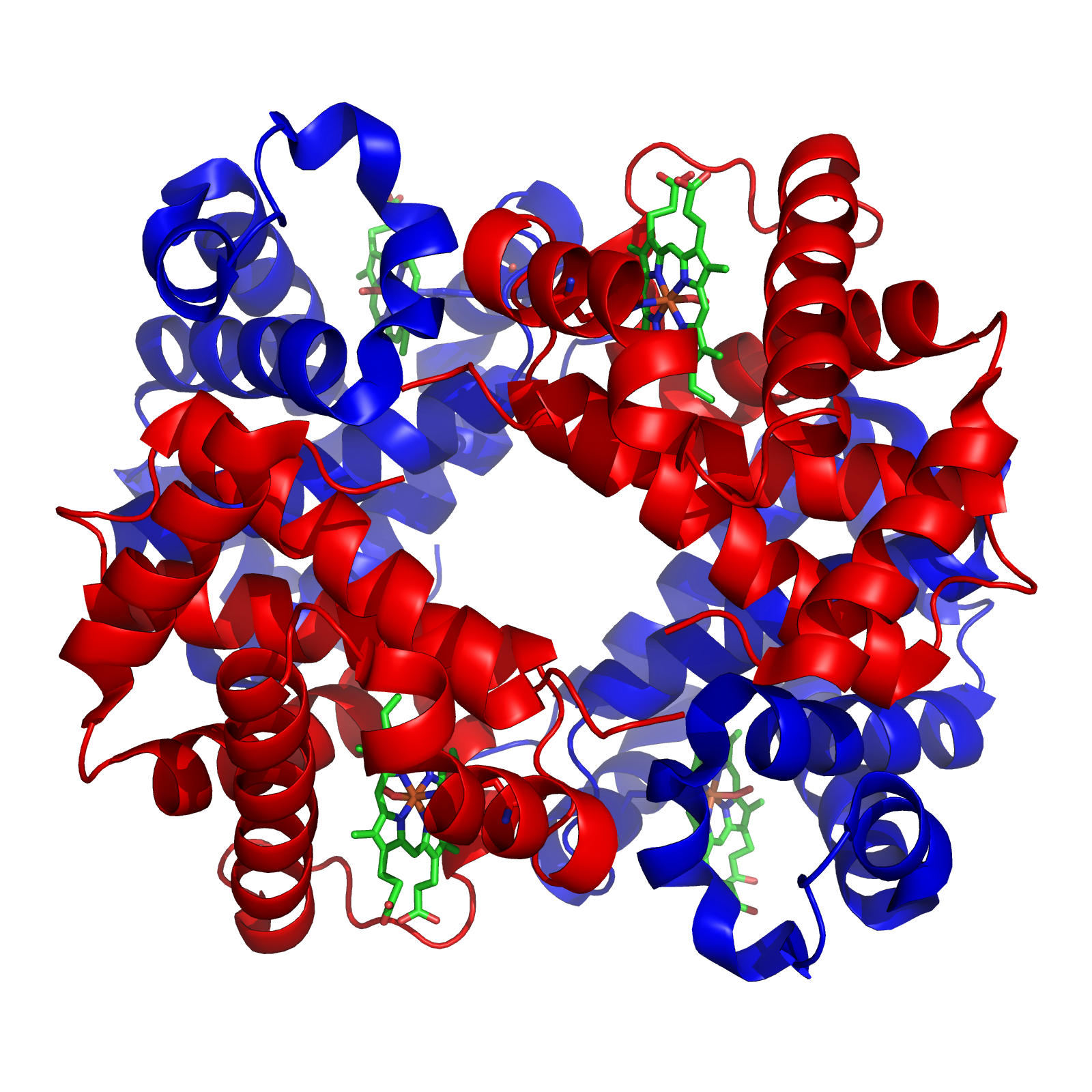
This unit was about DNA, and how proteins are formed. This is a very complicated process, and occurs very fast in our cells. It is important to understand how everything works. You originally have a strand of DNA in the nucleus. Then DNA Polymerase copies that DNA, and creates RNA. This mRNA leaves the nucleus, and heads for the ribosomes. Once it reaches the ribosomes, it goes through the RNA's instructions on how to build a protein. Once it has gone through the instructions, a protein is formed! My greatest weakness is vocabulary. I always struggle memorizing vocabulary, and also some of the more deep concepts. On the other hand, I am good at understanding how all the processes work. I also don't have trouble remembering what is actually going on in the cell. From this unit, I basically learned how I am alive. People need proteins to survive, and this is the process that explains how proteins are built. The infographic really helped me understand all the main ideas because building it was reviewing the content. I defiantly am happy I worked hard on my infographic because it helped me grasp all the ideas that the newer course material builds on. I defiantly think i am a better student today because of my further biology knowledge. I do have a question that I would like to learn more about. How does that RNA reading factory in the ribosomes work. It looks really interesting because of how all the pieces move around. I have tried to study with a bunch of different styles because I am a multimodal learner. This has proven good and bad. To study with many different types of studying (Visual, Written, etc) it requires much more time. I defiantly need to put aside much more time to study.
http://faculty.utpa.edu/lmateron/3401/mainimages/protein_synthesis.gif


http://i.livescience.com/images/i/000/053/587/i02/dna-rna-structure.jpg?1370549225

Tuesday, December 8, 2015

Protein Synthesis Lab

A protein is made through a very complicated process. First of all, the DNA gets copied, and that copy is called an RNA. The mRNA then leaves the nucleus, and heads over to the cytoplasm. The mRNA specifically goes to the ribosomes, the ribosomes reads groups of three bases. These groups of three bases are called sequences. Then DNA Polymerase goes around determining the proper amino acid for the codon. Once the process is finished, it all folds up to become a protein!

https://upload.wikimedia.org/wikipedia/commons/thumb/b/b1/Ribosome_mRNA_translation_en.svg/2000px-Ribosome_mRNA_translation_en.svg.png

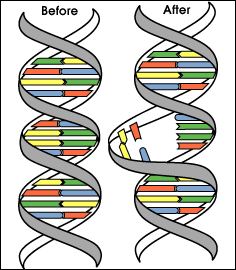
When you think about buying things, you always have that chance of getting a factory defect. That is why many companies have warranties, so they fix a defective product! This happens with making proteins too, but it is actually called a mutation. The three different types of mutations are insertion, deletion, and substitution. It seems as though substitution is the least effective mutation because it only affects one sequence. Remember that a sequence is a combination of three base letters. Deletion and insertion can be huge problems to the protein, especially if they are at the start of the RNA/DNA strand.
https://www.biostat.wisc.edu/~kendzior/MADGiC/dna-mutation-graphic.jpg

For the mutation of my choice, I used substitution. I chose substitution because I knew that it wouldn't greatly affect the DNA strand. It only changed one sequence, and it wouldn't make a difference where the mutation was located.
http://image.ohmynews.com/down/images/1/todd_231510_1[323095].gif

Proteins are essential to life, so it isn't optimal to have a mutation. A mutation could make oxygen travel in much less quantities in your blood. There are also mutations that stop the blood from clotting very easily. Blood needs to clot in order to stop bleeding, so bruises can be a very bad thing. I looked at a mutation that was the complete opposite of this, and it is called Thrombophilia. This is when the blood has an increased tendency to clot. Blood clots in your veins are very dangerous. My Mom actually had one, and it isn't anything to mess around with. A blood clot in your veins can travel around your body. It can go to your lungs, brain, or heart. There is an extremely high risk of a person dying if a blood clot gets lodged in any of these places.
http://www.qmedicine.co.in/top%20health%20topics/T/images/demo/thrombophilia.jpg

The picture above shows a blood clot in a vein. It is easy for one of these clots to get stuck. It is very dangerous, and doctors usually keep people on blood thinners to try to stop the clot from getting stuck.

Friday, December 4, 2015

DNA Extraction Lab Analysis

DNA Extraction Lab Analysis               


               In this lab, we asked the question if DNA could be separated from cheek cells, and when we would be able to see the DNA. We were able to see the DNA from our cheek cells, and mixing certain ingredients in order made this possible. We needed to swish our mouths with gatorade, and rub our teeth on our cheeks. The cheek cells come off because that is the type of cell they are. They are similar to our skin. Once we mixed our ingredients (salt, detergent, isopropanol alcohol), The bubbles from the alcohol made pulled the strands of DNA up to the top of the solution. The bubbles from the alcohol supports my claim because the DNA wouldn't be visible if the bubbles didn't pull it into the layer of alcohol. One error we initially did was incorrectly do the steps. We forgot to mix everything in the test tube. This could have made less DNA come to the surface. I also used too much gatorade the second time I tried the experiment, so it was much harder to see any of the DNA. First off, I recommend you make a check list with all the steps. It is extremely helpful to visually have your steps because it is so easy to just miss one. Also, take it slow! If you rush through the experiment you are likely to make a mistake. This lab was designed to give us the opportunity to understand how much DNA is actually in the cells. There is also a further meaning to this lab. This really explains how the cell membranes work! The only reason that we were able to see the DNA is because the ingredients basically dissolved the cell membranes. This allowed all the contents of the cell to be released. This is why the DNA was floating around. The DNA didn't become solid until it was introduced into the alcohol though. I defiantly think this relates to how much DNA is stored in the cell. It is also related to cell membranes containing all the contents of the cell. Cells wouldn't be around if there wasn't a membrane holding everything together. It is quite difficult to think of how the information of this lab could be used in another context. It defiantly could be used to extract DNA from fruit, and that could be pretty cool! You also challenge yourself to see what you can extract DNA out of. Is it possible to extract DNA out of an apple because the hard, crunchy membrane? That would be a pretty interesting test!

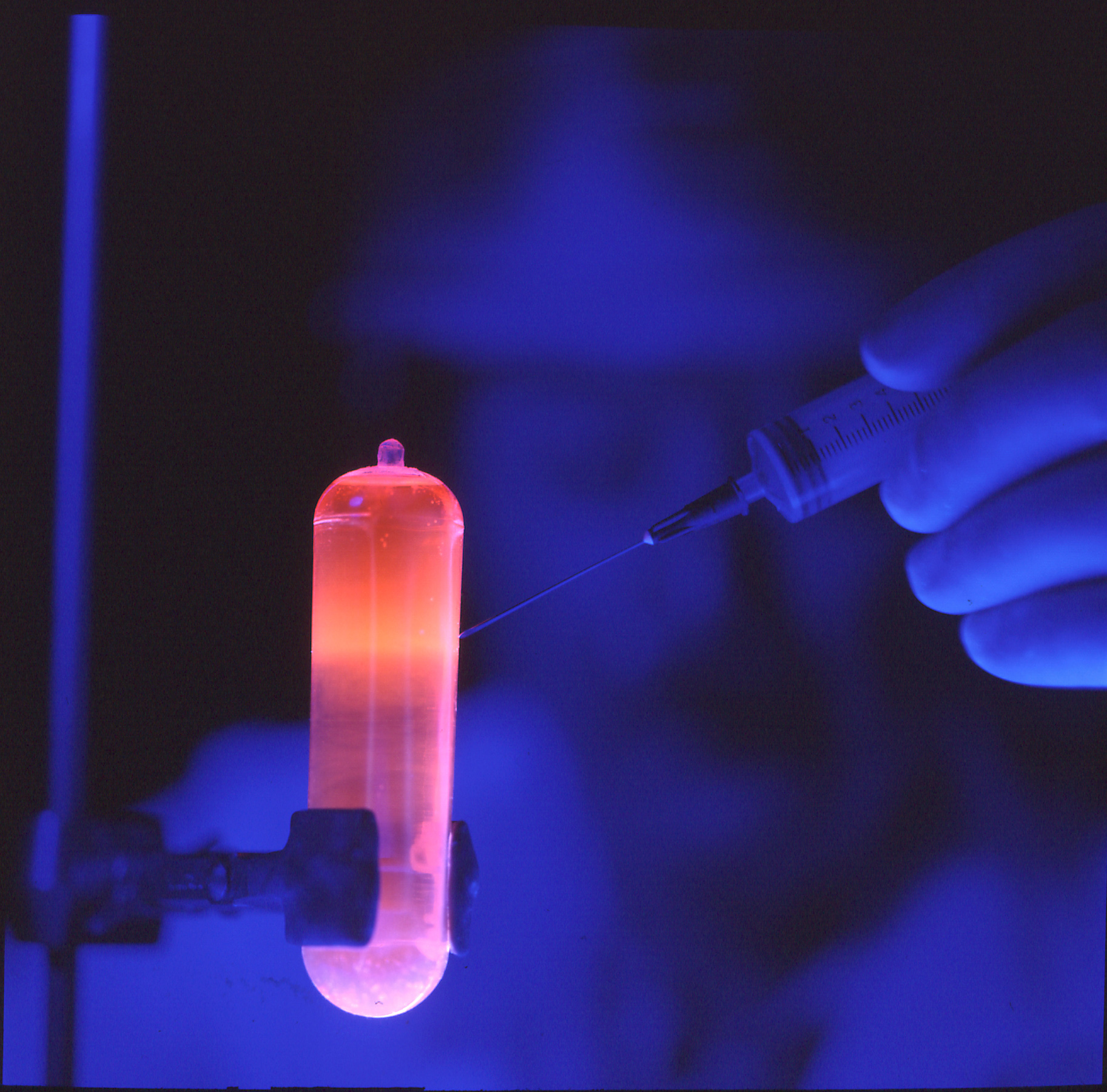
I don't have a picture of my extraction, but I did find a pretty cool picture of what the DNA might look like. Check it out!


https://upload.wikimedia.org/wikipedia/commons/0/07/DNA_purification.jpg


Thursday, November 19, 2015

Unit 4 Reflection

  • What was this unit about? What were the themes and essential understandings?
We learned about gene related topics. We learned about what alleles are, and the difference between dominant and recessive genes. We also learned about the 2 sex chromosomes, and 44 normal chromosomes someone inherits from their parents. It is important to understand probability vs predictability. 
  • Interpret how things went this unit by discussing either of the following, or both:
    • Your strengths and weaknesses.
The terms are quite difficult to memorize in my opinion. I also think that some of the laws were difficult to memorize. It certainly isn't impossible, and memorization and biology come in a package. I was successful at actually understanding what is going on in these processes.
  • What did you learn from these experiences?  
I learned how to identify what trait someone will have by their dominant and recessive genes. I also learned how to use a Puentt square to identify the probability of someone receiving a certain trait. The infographic basically helped me grasp these ideas better since I was needing to recall all the topics.
  • What do you want to learn more about? What unanswered questions do you have? What do you wonder about?
I honestly don't really need to learn about anything else related to genes. Personally, i don't find genes a super exciting subject; however, it is cool understanding the basics. I am glad i have learned what I have learned, but I have no need to look further than i already have.
Learning how you learn
  • What are your preferred learning styles (give your scores)?
Visual 11
Aural 8
Read/Write 7
Kinesthetic 7

  • Did the results surprise you or were they what you would have expected?
I honestly didn't think i would be a multimodal learner. I don't know if i am too happy about being a multimodal learner because that means I need to study using multiple methods instead of one method. On the other hand, multimodal learning might be more useful to me in everyday scenarios.
  • What do you do, and what can you do, to play to your learning style strengths as you prepare for your upcoming test?
I need to do spells of different learning techniques. Hopefully mixing up my learning techniques will help me take advantage of all my learning methods.

Wednesday, November 18, 2015

Coin Sex Lab Relate and Review

I learned about the difference between probability, and what actually happens during genetic inheritance. Coins were the alleles, and would land on a side randomly. This was showing how random some of the results could actually be. We also learned about how gene segregation affects the results of our experiment. We looked at homozygous and heterozygous traits, and determined the traits from the allele combination. We also did an experiment regarding a dihybrid cross, and that was the most difficult one in my opinion. During meiosis, chromosomes can go through recombination. This is when two chromosomes trade a piece of themselves, and this alters the gene possibilities. There are forty four autosomal chromosomes, and two sex chromosomes. The sex chromosomes are X-linked inheritance. We also saw monohybrid sets of genes in the start of our lab. One example of how the probability can be totally different from the outcome is our colorblind experiment. The probability was roughly twenty five percent of ten children would have colorblindness; however, five of our offspring had colorblindness. This means that we had an outcome of fifty percent. This means that probability is only effective to a certain extent. You can't determine what traits your child will have, but you are able to get a rough idea. Understanding this really makes understanding everyone's differences easy. It is quite amazing to see how so many different gene combinations can make everyone different. I now understand that it isn't possible to say that a baby will have blonde hair, but it is possible to say that there is a fifty percent probability of this child having blonde hair.

Monday, October 19, 2015

Unit 3 Reflection

This unit was about how Photosynthesis worked, and all the details. I learned about how the cell was discovered, and also how the cell can be like a factory. It was essential to understand the parts of the cell, and how they affect the processes of the cell. It also was essential to understand the steps of photosynthesis. I was successful at understanding how photosynthesis worked, but memorizing all the parts of the cell was a setback. It also was difficult memorizing all the terms. I learned that memorization is a huge part of biology. I also actually began to understand what cells are. Cells have always been a mystery to me, and I actually understand how cells work. I want to learn more about how cells react. How do they know where they are going? Is is possible to watch a cell's processes? I am planning on reviewing all my notes, and looking at portions of vodcasts. I also am going to fill out some blank pictures of cells to try and test my understanding.

Thursday, October 8, 2015

Egg diffusion lab

Kyle Chidlow
Period 4
October 7, 2015


Egg DiffusionLab


In this lab, we originally put some eggs into vinegar. This dissolved the shell, and then we start our experiment. We took two eggs (both of them have no shell, just membrane) and placed one into deionized water and the other one into sugar water. We left the eggs for a while, and then looked at them. The egg in deionized water got slightly bigger, for some reason the my group’s egg didn’t get bigger, and the egg in sugar water shriveled up. 

While looking at class data, it was common that the egg shrank when put into sugar water. This is because of a process called diffusion. Since the inside of the egg had a higher water content than the outside of the egg, the water moved out of the egg. This lead to an extreme decrease of the size of the egg. On the other hand, the egg size/mass increased when the egg was put in deionized water because the water passed inside the cell.

In this experiment, the cell membrane was pretty much the main reason anything changed in the cell. Diffusion was the main process that we tested in this experiment. This is probably why eggs are surrounded by a protective shell. The shell protects the egg against diffusion, and also things popping the egg. It also demonstrates how sensitive cells are to their surrounding conditions.

Vegetables are sprinkled with water because the skin of the vegetable can absorb that water. Salt is used to melt ice, but it destroys the plants on the side of the road. Usually there are not too many plants on the edge of a road where they salt the area all the time. 


After doing this experiment, I would like to test what different liquids do to an egg. How would lemon juice vs soap affect an egg? I would also like to test putting salt water on cells, and observing their changes in a microscope. This would be a very interesting way to observe the changes.

Tuesday, October 6, 2015

Macromolecules lab conclusion.

In this lab, we asked the question if macromolecules could be found in an egg cell. With use of the chemicals: Iodine, Sodium Hydroxide, Copper Sulfate, and Sudan III or IV, we were able to find the cells. When we were looking for monosaccharides, we found them in the egg white and yolk. When looking for lipids, we found them in the yolk, egg white, and membrane. We found protein in the yolk, egg white, and membrane. We on only found monosaccharides in the yolk and egg white. When testing for lipids, the chemical we used turned orange when lipids were present. When testing for protein, the chemical turned purple when the protein was present.When testing for polysaccharide, the chemical turned black when polysaccharides were present. The chemical turned green when monosaccharides were present. Since membranes are made out of lipids, it isn't a surprise that we found lipids in the membrane.Protein helps the egg develop, and we found protein in all parts of the egg. Polysaccharides provide energy/food for the egg, so its not too surprising that polysaccharides were found in all parts of the cell. The color changes support my claim because it is the only way to find out where and if the macromolecules are present. One error that might have occurred is contamination. This could lead to false results because of the color change even if there shouldn't be a color change. A second possible error is judgement. Judgement sounds like a silly error; however, it actually is very easy to come across. Sometimes the color may slightly change, so you need to determine if the macromolecules are/aren't present. My first recommendation would be to wash all the tools before changing parts of the egg. My second recommendation would be to get another persons opinion if you are not sure with the color change! The purpose of this lab was to separate the parts of an egg, and find out where certain macromolecules are located. I remember learning about the cell wall in class, and this experiment allowed us to take pieces of the cell wall, and test to see what macromolecules were there. After learning about this, you could use this knowledge with anything related to cells because you have physically touched and looked at one. Now you can use this as a visual whenever thinking about cells.

Tuesday, September 29, 2015

Are we alone in the universe?

After reading about the 20 big questions in science, I have chosen the question: Are we alone in the universe? I am interested in this question because it is a very interesting concept. If many planets in the universe can sustain life, then is there alien life out there?

1) How many of the stars we see in the sky actually still exist?
2) Can mars sustain micro-organisms because of the recent finding of streams?
3) Is it possible for a break in the time-space continuum?
4) Could a person safely travel through a wormhole if one existed?
5) Is the process of aging stoppable or reversible?
6) Are humans still evolving even though we have created adaptations around us?
7) Are the polar ice caps the world's air conditioning?
8) Can space travel at "warp" speed be possible?
9) If you shine a light into space, will the light keep going when you turn the source off like stars?
10) Is the aging process caused by your body fighting off bacteria?
11) How can chemicals known to the state of California to cause cancer mutate cells?
12) Is it possible to use the earth's magnetic field to cause things to levitate?
13) What type of damage could the emissions of Volkswagen cars have done to the environment?
14) Why do objects create their own gravitation field with enough mass?
15) Why does the sun keep planets in an elliptical orbit, and not a circular orbit?
16) Why does coke dissolve a nail within 2 weeks?
17) When you pour acid on an object, how does it dissolve the object?
18) How do chemical reactions get affected by temperature?
19) Can we change the properties of a material? Example ( Make egg rubbery/bouncy)
20) How does cornstarch + water maintain a liquid and solid form at the same time?

Monday, September 28, 2015

Identify questions and hypotheses

Does patience lead to better self control?

https://en.wikipedia.org/wiki/Stanford_marshmallow_experiment

Hypotheses: If patience leads to better things in life,  did the more patient children have better life outcomes?

In this experiment, a group of young children were left in a room. They were left with a treat on the table, and they were told they would get something better in 15 minutes if they don't eat the treat. Some children ate the treat immediately, and some children waited the 15 minutes. It was proven that the more patient children had a better life in general.

Monday, September 21, 2015

Cheese lab


In the curdling lab, we tried to find the optimal PH, temperature, and curdling agent for making cheese. We realized that Chymosin and Renin did significantly better in a more acidic PH. We also learned that Renin did better in a more basic setting. When looking at temperature, it is clear that Renin did much better in the hot water. If my ‘supervisor’ would like a more acidic cheese, then she should use either Rennin or Chymosin. If She wants cheese in the fastest possible time, then she should use Chymosin in a warm setting. Chymosin got 20 minutes, and Renin got 33 in a warm setting. This evidence supports my claim because it quantitatively answers the question to our lab.

There are many things that can go wrong in this lab, so don’t take every quantitative piece of data literally. First, there are inconsistencies with the amount of renin or chymosin added to the milk. Every student had a pipet to use; however, there is no precise way of getting the right amount. This could lead to slower/faster curdling times. Second, the temperature of the hot water wasn’t perfect. Although the warm water tub was set for body temperature, it actually was a few degrees too low. This is bad because even a slight temperature difference can affect the speed of the reaction. Third, judgement… Everyone in the class has a different idea of curdling. One student might believe a small bubble/clump on the very bottom of the test sample is curdling, and another student might wait until they see big lumps. This doesn’t make one student wrong, but it does make wiggle room for inconsistencies.

I have two recommendations for you in order to improve the lab. First, Use a graduated cylinder to measure the amount of renin/chymosin. It will deliver more accurate testing. Second, use a thermometer in your warm water tub so you know what the actual water temperature is. The purpose of this lab has multiple meanings. It teaches us how sensitive enzymes/proteins are to their environment. It also taught us how curdling agents work to improve the speed of the curdling of milk.

This lab is related to the vodcast about enzymes. When we put the milk in the ice water, nothing happened. This is because the conditions caused the protein to denature. If you put that denatured protein back into warm water, it would renature and be normal again. This lab taught me about how cheese is made, and also how proteins work. I also know what happens to my milk when it gets all lumpy!


Unit 2 Reflection


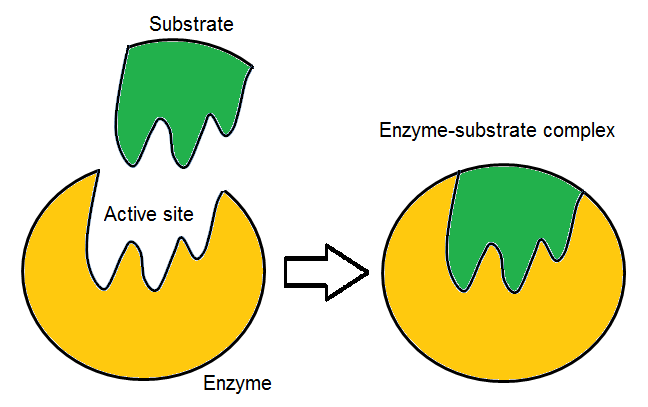
This unit was about Enzymes, Proteins, and more. We got to learn how enzymes work. If you have more enzymes, your substrate will be processed faster. If you have more substrate, you will have more product. We also learned about activation energy. Activation energy increases when temperature or PH isn't perfect for the protein. Sometimes, the protein can become deformed and de-nature because of the in-tolerable conditions. Proteins can re-nature easily once put back into their comfortable surroundings. I learned about carbohydrates, and how their structure can affect their taste. Complex carbohydrates are a preferred form of energy. I learned about the properties of water, and how it is possible for spiders to float on the surface. Water has surface-tension because of the molecules forming a bond. I do have some difficulty remembering the vocabulary. Cohesion is the attraction of molecules, and adhesion is the attraction of molecules of different substances. Protons, neutrons, and electrons make up atoms. A proton is positively charged, and an electron is negatively charged. A neutron has a neutral charge. A nucleus is the center of an atom. An ionic bond forms when an atom gains/looses an electron, and a covalent bond forms when electrons are shared between an atoms. Hydrogen bonds form when there is an attraction between the positive and negative regions. The big 4 macromolecules are carbohydrates, lipids, proteins, and nucleic acid. I want to learn more about how enzymes that are not produced by the body affect the body. I learned why it is so important to eat healthy food because the complex carbohydrates and proteins are good for your body.
Natured/healthy protein

De-natured protien


Monday, September 14, 2015

Sweetness Lab

          In this lab, we tried to see how the structure of the carbohydrate affects the taste. We took samples of Sucrose, Glucose, Fructose, Galactose, Maltose, Lactose, Starch, and Cellulose. We created the hypothesis that fructose will be the sweetest because it is a Monosaccharide ( Simple sugar), and is also found in honey, which is extremely sweet.

          After tasting all the samples, we decided that Fructose was the sweetest carbohydrate. On a scale of 0-200, we put it at 200. We also decided that Cellulose was the most bitter. I actually made cellulose -200, even though the scale goes from 0-200. Cellulose is so bitter that it actually pulled the taste right out of my mouth. Sucrose was set at 100, and that was basically our reference point. The evidence supports our claim because all of the complex carbs were very bitter. Starch and Cellulose are Polysaccharides (the most complex carbs), and they were rated -100 and -200. This clearly shows that the more complex the carbohydrate is, the more bitter it will taste.

           I believe that our bodies can't break down the more complex carbohydrates very quickly. I also believe this is the reason they don't taste sweet. It is possible that our bodies take a lot longer to find the sweetness in a more complex ca
rbohydrate, so it tastes bitter on the surface. Complex carbs are most likely the bodies preferred form of energy because it provides a consistent flow of energy. Simple sugars are probably used as quick bursts of energy. I don't believe this is a very good form of energy for your body because it is only a short burst.
     

    There are 3 reasons why the samples could taste different to different students. The first reason is because everyone has different taste buds. The second reason is probably related to what they eat. If someone eats super sweet foods every day, then the cellulose probably tasted like dirt; however, someone that is use to bitter food may not hate cellulose. The third reason is that everyone has different opinions. Even if the sample tasted the same to two people, they will probably rate the samples differently because of their opinion. If someone gave me medium salsa, I would probably rate it spicy because i am not use to spicy foods. This is the same for the sweetness lab because people are use to different things.

          Taste buds are sensory organs on your tongue. Everyone has a different number of receptors, and that is why some foods may taste different than others. Also, taste buds are always replaced.

Sunday, August 30, 2015

The Jean Lab

The Jean Lab

In this lab, we asked what the best solution of bleach and water was to fade jeans during a 10 minute time period, and there couldn’t be any visual damage to the denim. We have found that 50% bleach seems to be the best possible mixture. The 25% concentration was not very faded, so we decided it wasn’t effective enough. The 100% concentration faded the jeans to almost white, but the damage was roughly 8.5/10. We decided that there was too much damage to the jeans with the 100% bleach, so we settled on 50%. The 50% solution roughly had 5.5/10 damage. Even though 5.5 sounds like a big number, we believe that the denim is still extremely strong. We couldn’t tear/destroy the denim with our hands; however, we do not know how long-term durability will be compromised. It is widely known online, and possibly in textbooks, that bleach takes all the color out of clothing. Many stain removers actually contain a small amount of bleach to help remove the stain. Many companies bleach their jeans for that “used” appearance; however, they probably use less bleach over a long period of time. This data supports our claim because if they used a higher concentration, then the jeans would be more of a whitish color instead of blueish.

While our hypothesis was supported by our data, there could have been errors due to time. We did two batches, and one batch was left for longer. Our results might have been slightly affected because the average fade might be a little greater. This would be good be for our results though because there might be slightly less overall damage. I recommend that  you are very precise with time because bleach works extremely fast on clothing. Also, make sure to prepare all the measurements before putting the denim inside the bleach solution.

This lab was done to demonstrate the effects of different concentrations of bleach on denim. This lab also helped us test the scientific method, and also work on performing an experiment. I have learned how useful the scientific method is when performing an experiment. I have also learned how difficult it is to find the perfect concentration of bleach to fade jeans. From this lab I have learned how to organize data, and how to use the scientific method. Based on my experience from this lab, I believe performing labs will be much more efficient. I also believe that this helped me understand how to deal with chemicals safely, even though bleach isn’t a very dangerous chemical.


Concentration ( % Bleach )
Average Color Removal
Average Fabric Damage
100
9.5
8.5
50
5
5.5
25
3.5
3.5
12.5
1
1
0
0
0