Unit 10 was about the anatomy of an animal. In this unit, we had multiple podcasts paired with a pig dissection designed to help us understand what we have learned. In this review, I will talk mainly about the parts of the pig to demonstrate my understanding because the pig was really an overview of everything the vodcasts taught us. We first looked at the external parts of the pig. This wasn't necessarily in our vodcasts but it allowed us to see the placement of the bones and joints. It also helped us understand the movement of the legs. Then we opened the pig up. We were able to identify major arteries and veins because of the red and blue plasticizers put in the pig. We then were able to look at the digestive system. We saw the size and placement of the pig's teeth which appeared to be able to hook onto meat. Possibly to help it consume something faster. Then we were able to see the stomach which was honestly very surprising. It was absolutely tiny and flat because it had no food in it. I expected it to be more rounded even though it was empty for some reason. The small and large intestines looked way different than each other. I guess i was also shocked at how different they appeared. It was definitely interesting to see the difference. We also looked at arteries which were hidden behind tissues. And it was amazing where the kidney was placed. It was hidden underneath the small intestine and a small sheet of tissue. Also, we were able to observe the chambers of the heart. It actually seemed insanely tough, and I had trouble imagining it beating because it seemed so solid. The lungs were also there, and were a very interesting triangle shape. I expected them to be more like bags, but they had a very defined shape. They were not very strong either because a light touch with the probe tore part of the surface off. The most amazing part to me was the neck. It was so crammed with different things including they Thyroid and voice box. It was legitimately difficult to find anything in there! I want to learn more about the anatomy and possibly numb myself to seeing an open animal on the table. Mostly because if there is ever a draft I certainly would want to be like the doctors in m*a*s*h. In August I wasn't sure about the whole flipped classroom. I still am not entirely sure about how much I like it, but I will admit that it isn't too bad. Some of the vodcasts, i will admit, seem way too long. 15-19 minute vodcasts really trouble my attention span, but that is a trait about myself that i am happy to know. I will use this extra understanding of my attention to make sure my job isn't related to constantly interacting with a computer. I have definitely got my own routine with the vodcast notes, and i believe i was better off because i started from day one taking my own notes. My Unit 4 review is a good example of how I started writing reviews . I wasn't very creative, and tried to stick to the questions. Now i just try to flow wherever my mind goes, and talk about it. I definitely think it is a more effective links.This is my favorite post because I really went over and above to talk about my 20 time experience. I think that this year has opened my perspective on different teaching methods, and should have helped me understand what writing blogs is all about. I am happy i have a digital copy of all my work on my blogger to look back on.
Tuesday, May 31, 2016

Thursday, May 26, 2016
20 Time Reflection
20 Time Reflection
In this 20 Time unit, we wanted to explore our passion for cars. Not just cars in general, but specifically engines. Before this unit, I only had a vague understanding on how engines worked. All I knew was you fill it with gas, the engine can hold a certain number of liters of fuel, and there are different numbers of pistons. I decided to team up with jacob to go on a research journey to figure out how an engine works. We looked extensively at engine specifications, designs, and sizes (displacement) to completely understand how an engine works, and what main factors affect the engine. We later found a shocking new trend from car manufactures. Car companies such as Ford are producing smaller engines with turbochargers. We looked further into how car manufacturers are using 2 small turbochargers to boost the engine. Before I continue, let me define some terms:
Piston- A cylinder in the engine where Oxygen and Air are mixed and ignited. This explosion pushes a plate (think of it as a cork which can move) up and it falls back down when the explosion ends.
Turbocharger- A little fan connected to the car's exhaust. When the engine produces exhaust, it spins this fan which is connected to a tube. The fan pushes air into this tube which is connected to the engine. This air pressure is pushed into each piston before the explosion occurs. The more oxygen in the piston leads to a larger explosion leading to more power.
Supercharger- A fan connected to the top of the engine. It is super simple. The fan is connected to a huge belt on the front of the car called the timing belt. This belt spins when the engine is on, and powers numerous components on the engine. This belt spins the fan (supercharger) which is connected to the air intake (where air enters the engine and goes into each piston). This fan pushes more air into the engine than the normal amount of air, so it has the same affect as a turbocharger.
Now that i've defined some terms, I can talk about current technologies and the future. Car manufacturers have started making tiny engines (4 cylinders) with the power of bigger engines such as 6 or 8 cylinder engines. The way this is possible is by using two turbochargers. This allows them to get a ton of power out of a smaller engine. You may be wondering what the point of this is, but the points are very important. A smaller engine saves a lot of weight, it is more efficient, and a lot more compact. Plus produces less emissions for all of you who support cutting down emissions to save the planet! A new technology is called an Electric turbocharger which is the same as a normal turbocharger except the fact that it uses a motor to spin it. this means you are able to get constant boost into the engine. If the engine is designed to handle all the boost, the power output from the engine could potentially be off the charts! We later learned that with the right amount of technological improvements, the electric car would definitely be the replacement for the gasoline engine. One main reason is the performance of the car. Once battery technology improves, and motor efficiency improves- the car will be able to do a lot of miles. We also found that electric cars don't need a transmission. A transmission is designed to keep the engine at a certain RPM which leads to the highest power output. If a car's RPM is too high or low, it will actually be producing less power. An electric motor has a linear torque curve meaning that it needs no transmission, and will consistently keep applying power to the wheels. This is a huge improvement. Problem with electric cars is the fact that the batteries are too heavy, don't hold enough charge, and the motors are too inefficient for the batteries capacity.
Now, time to talk about the 20time presentation. I would call it a failure for two reasons. First off, our topic isn't necessarily something that can be discussed in 4 minutes. In order to make sure the audience completely understands what I am talking about, it would take at least 10 minutes easily. This forced me to try and rush the details which we researched. To Mr. Orre and the audience, it may have seemed like we didn't do much work, but all out research lies in the details which brings me to my second point. The more i explained how an engine works, the more the audience was loosing attention. Once i saw this trend, i quickly stopped talking about the details. I confirmed this at the end of the presentation because people were saying that I went too far. The problem is, I barely even scratched the surface of the research we did for our 20 time project. This means we didn't necessarily get a great grade even though the effort was there. If we had some time before the presentation to teach the audience some of the key terms and ideas about how an engine works, everything would have made sense, and we would have been able to showcase our work. Unfortunately, this didn't go as planned. Also, our presentation was way over the limit.
Pig Dissection Lab
Pig Dissection
Below is a video of our pig dissection. The purpose of this lab was to allow us to view the respiratory, circulatory, and digestive systems in real life. We also were able to look at the heart, and understand how everything in the body is placed. We also learned many simple details such as the clear wrap around the heard which stops it from exploding. We were also able to see how tiny the spleen is, which opens up new understanding about how easy it is to damage it. It also allowed us to understand how connecting tissue holds everything in place. It was surprising to see how everything could be found by peeling back thin layers of tissue in the pig's body. The lungs looked a lot different than I thought it would, and I never expected the small intestine to appear deflated. There is a huge difference between how the large and small intestines look, and that also surprised me. It was surprising to see the kidneys and thyroid gland. Everything seemed to be placed so precisely. The veins and arteries were huge right next to the heart. It amazed me how simple yet complex the heart is. I am not sure if I loved this dissection because I felt really sorry for the pig. I also found that it was kind of gross at first. Dissecting the pig almost made me feel like Hawkeye working at the 4077th MASH!
Tuesday, May 10, 2016
20 Time Individual Reflection
20 time has really allowed me to explore my love for cars. I have always been interested in cars, but I have learned a lot more about cars. My goal was to learn about the new engine technologies such as turbochargers and fuel injection methods. I was mostly focused on self-improvement because this project was a quest for knowledge. I really wanted to understand where the market for cars was heading, and why electric cars are the future. We have been perfecting engines for such a long time, so why are we moving towards electric motors? This really stumped me because I didn't necessarily understand. I was also curious about turbochargers because they have been around for a very long time. What have they figured out recently that has made these turbochargers so successful? There are only a few of the questions that have sparked my interest in cars. My plan was to start off researching different technologies being used in cars today, and then move towards the future. This was a very successful project because I now understand every detail on a car. I can look at an engine and determine what every part does, and also find a way to take things apart. I wouldn't change anything with how i've done my project because i believe that it was super successful. I believe I am going to start a new challenge. I would like to work on my car. My car already has many customizations on it, but I wish to take that further. I also want to look at the invention of electric turbochargers. They are very cool, and I believe that they are a big step forward in the car industry.
Thursday, May 5, 2016
Unit 9 Reflection 💥
In this unit, we learned about many things. First off, we learned about the different species of animals that lived in the past. We looked at how animals are classified, and what characteristics were used to classify them. There are many special features about the animals evolved, and fossils allow us to see these incremental changes. It is also important to note the kingdoms had very specific requirements to have a certain animal within them. We also learned about how animals evolve. The bad genes get filtered out, and the good genes get passed on. This explains how fish were able to become land creatures. The fish genes got filtered out because they were unable to survive, and the land adapted genes took off because they were able to survive. Refer here to look at my reflection on Your Inner Fish. Here is a cool picture showing a land fish.

This is one of the links in history where fish moved onto land. The fins evolved into the long bone, short bone, many bone structure. This is just one example of what we've learned in this unit.
Tuesday, May 3, 2016
My inner fish
Your Inner Fish is a TV series about evolution. It goes back to fossils, and explains how ancient species changed throughout evolution. In this TV series, we learned about how biologists found the missing links in evolution. We learned about fish moved from sea to land in out evolution unit, and this show tells us how scientists found the bones from the missing link. Also, we learned about the long bone, short bone, many bones layout. This show discusses this to a further extent. To elaborate on the question related to the sonic hedgehog, it is basically a little cell giving out a signal where to stop. If that little signal emitter is removed, then the arm basically mirrors itself because it didn't know where to stop. This can prove to be useful, but also shows up on accident sometimes. Elaborating on the question regarding the hybrid land/ocean animal, basically it's limbs changed length in order to accommodate land movement. It's bones got longer, and shoulder got more motion. This allowed it to be much more mobile on land, and even lay down as if it were doing a push-up.


Friday, April 15, 2016
The Deadly Sea Slug
The Portuguese man o' war is a sea slug thing, and it is very poisons. It does not contain a spine, and floats around the water. It defends itself from a predator by stinging them. People could get potentially injured by handling one because of the sting. This organism is made out of little things called zooids; however, it isn't a jellyfish. It can be fatal when it stings you. It has a gas bladder, and lives at the surface of the ocean.


This is an extremely dangerous organism, and looks like a jellyfish. It comes to a surprise that it isn't a jellyfish because it appears to be one. It fills its upper body with gas in order to float on the surface of the water. It can control the amount of air it contains too.
Thursday, March 24, 2016
Unit 8 Reflection
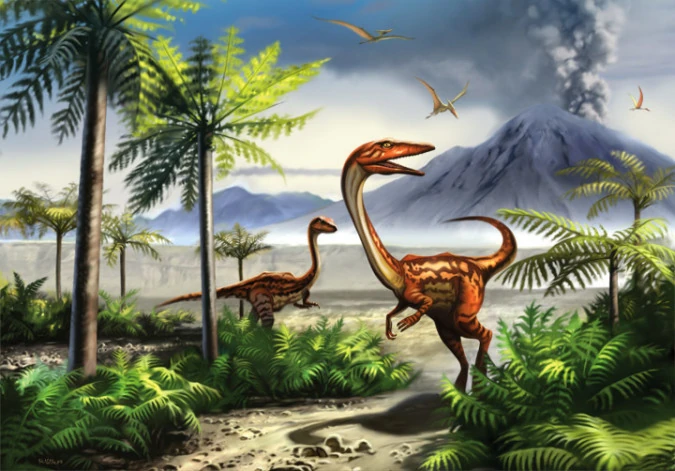
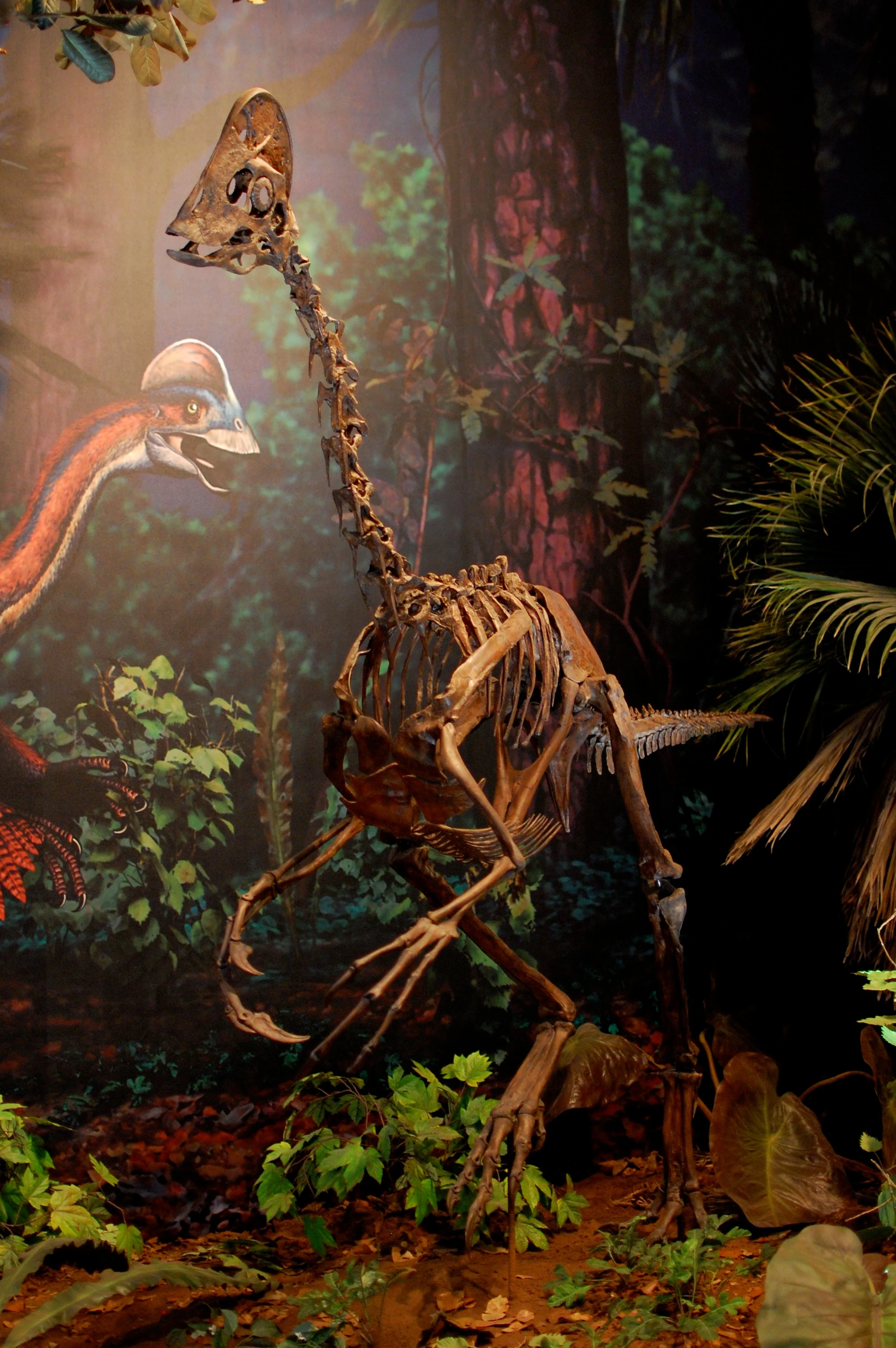
In this unit, we learned about the world, and how insignificant we are to history. The earth dates back roughly 3 billion years ago. People have barely been around for a couple million years. Go to this link to view a timeline of earth's history. It is also amazing to see how evolution occurs. It is really simple when you link back to the saying: survival of the fittest. The animals with badly 'equipped' traits don't survive, and that means the traits don't get passed on. Also, it really shows how the smallest event could change the course of history. If the dinosaurs were still around today, would we even exist? Its also interesting to consider the fact how quickly we are destroying the earth. If you look at pictures of the earth at night, you will see how much of it is actually lit up. This shows how much of the earth has been populated, and makes you wonder how many forests have been destroyed. Also, that haze you are use to- it isn't normal. When you see that thick gray smog in the air, you are breathing chemicals from the exhaust of all the cars. How long have cars been around? Around 120 years is the answer. Add that to all the other factories and incinerators. It is quite worrisome to see this happening. You can refer back to my timeline lab HERE. I want to learn more about what we can do to save the planet. Clearly if we keep polluting at this rate, there is no hope for sustained life on earth. I don't see us sending millions of people into space on a trip to a new planet either, so we are stuck with what we've got. The best move would be to treat it better. Being assertive isn't really a problem for me. I can actually be over-assertive very often. What I need to work on is being less assertive, and keeping quiet more often. My attempts haven't been too successful yet.
Tuesday, March 22, 2016
Geologic Timeline Reflection
- Describe 3 Major events in Earth's History. What made them significant? Use the CER format to give evidence and justification for your claims.
- Describe the scale of Earth's history. What surprised you?
- Consider how much impact we've had on our planet in our short time on Earth. Discuss your thoughts.
- What questions do you have?
- Include a picture(s) of your timeline, or other relevant pictures

Tuesday, March 15, 2016
Hunger Games Final Analysis
- In this lab, we simulated evolution at a rapid pace. People were given different traits that they needed to use to 'eat' the corks, and there were set amounts of food that people needed to eat in order to survive. After the round is over, the survivors reproduced. They would flip a coin with alleles on it, and this would determine the traits of the offspring. The offspring were basically revived people that died in the previous round.
- The pinchers (aa) were the best at getting food because they were able to grab it bwterrn their thumb and their index finger. The knuckles were decent at getting food, but they just we're not as good as the pinchers. Picking food up between your thumb and index finger is very natural for people, so that's why I believe they did the best.
- The population did evolve. It started out as a tie. 7 Pinchers, 7 Knucklers, and 7 Stumpys were alive. About halfway through through the lab there were: 11 Pinchers, 7 Knucklers, and 1 Stumpy. At the end of the lab there were only 4 Knucklers, 1 Stumpy, and 13 Pinchers. This is clear quantitative evidence that the population quickly evolved.
- Reproduction was defiantly not random. People were selecting their mates because they may have wanted a certain type of offspring. On the other hand, food placement was completely random. Also, the allele type of the offspring was random since we were flipping coins.
- The corks were a really good size for the Knucklers, but if they were larger that would have changed. If the food was a softball, the Knucklers would have immediately died. the Pinchers would have more trouble, and I believe the Stumpys might do the best. This could happen in nature if the food source changes. This could also happen if a new type of fruit tree/bush becomes present, and some animals are able to eat more than the others.
- If there wasn't incomplete dominance, then all the alleles with 'Aa' would become Stumpys too. This would mean that there is a much greater chance of having a stumpy than a pincher because the allele combinations are 2 to 1.
- Natural selection could be more related to reproduction. If Pinchers are attracted to Knucklers then they will always naturally mate with them. This is a form of natural selection. Evolution is related to the fact how the population changed over the 7 year period because the Stumpys and Knucklers couldn't eat as much food as the Pinchers.
- People reproduced with others usually based on their allele type. This is supporting certain populations because there is higher chance of having offspring of this type. This could occur in nature with certain animals being naturally attracted to other animals.
- In evolution, the best traits still survive. The unsuccessful traits get weeded out of the gene pool. This over time evolves to make the population better. Natural selection acts on genotype and phenotype. Natural selection is a huge part of evolution because it is really changing the odds.
Sunday, March 6, 2016
Bird Beak Lab
Graph:

Hypothesises:
1) If Darwin's theories are true, then spoon beaks might be eliminated throughout evolution.
2) If there are winners and losers, then the bird with the spoon beak certainly won't be one of the winners.
Evidence: Total chicks born
Spoon -> 18
Paperclip -> 6
Tweezers -> 15
Scissors -> 28
I wasn't correct with my hypothesis for this specific test; however, my hypothesis is correct for the part 2 experiment. I believe that the spoon isn't efficient at picking things up. It is actually really difficult so scoop up certain pieces of food unless they are in a big pile. Usually birds don't find a large pile of food.
CER Statements:
The paperclip beaks will defiantly be eliminated from the population because they are loosing by a lot. The scissors population is clearly taking the lead, so they will begin to look like the winners.
Part 2: CER Paragraph
Question: What will happen if all the macaroni a bird eats means -10 food?
Hypothesis: If macaroni is toxic, then the birds with smaller beaks will be way more successful.
CER: The spoon beak bird died because it couldn't pick out the food that wasn't toxic. This clearly shows how the birds with smaller beaks could selectively pick the non-contaminated food.
PE Paragraph:
2 Errors: The tables were not level, so there might have been some advantages to the spoon beak if it were on the lower table because they could use the step as a wall. This would make scooping food a lot easier. The second error could be placement of the food. The food was placed more on one table than the other. This means that the people with the food closer to them could have had a slight advantage. Just try to be more precise when you set everything up, and then you will not have the previously stated errors.
PA Paragraph:
Purpose of lab: This lab allowed us to see how selective evolution can be. It really makes it easy to see how different species can strive or die so quickly. This really helps traits evolve rapidly.
How it relates to vodcasts: The vodcasts were talking about evolution, and the gene pool. This really shows how certain traits can do absolutely horrible in a given environment. It also shows how certain species can strive, and then reproduce more often.
Applied to a different scenario: This can help you understand how certain dogs can be good for certain tasks. They have evolved to the point that they have kept all the important traits needed for their tasks, but also dropped all of the non-important traits.

Hypothesises:
1) If Darwin's theories are true, then spoon beaks might be eliminated throughout evolution.
2) If there are winners and losers, then the bird with the spoon beak certainly won't be one of the winners.
Evidence: Total chicks born
Spoon -> 18
Paperclip -> 6
Tweezers -> 15
Scissors -> 28
I wasn't correct with my hypothesis for this specific test; however, my hypothesis is correct for the part 2 experiment. I believe that the spoon isn't efficient at picking things up. It is actually really difficult so scoop up certain pieces of food unless they are in a big pile. Usually birds don't find a large pile of food.
CER Statements:
The paperclip beaks will defiantly be eliminated from the population because they are loosing by a lot. The scissors population is clearly taking the lead, so they will begin to look like the winners.
Part 2: CER Paragraph
Question: What will happen if all the macaroni a bird eats means -10 food?
Hypothesis: If macaroni is toxic, then the birds with smaller beaks will be way more successful.
CER: The spoon beak bird died because it couldn't pick out the food that wasn't toxic. This clearly shows how the birds with smaller beaks could selectively pick the non-contaminated food.
PE Paragraph:
2 Errors: The tables were not level, so there might have been some advantages to the spoon beak if it were on the lower table because they could use the step as a wall. This would make scooping food a lot easier. The second error could be placement of the food. The food was placed more on one table than the other. This means that the people with the food closer to them could have had a slight advantage. Just try to be more precise when you set everything up, and then you will not have the previously stated errors.
PA Paragraph:
Purpose of lab: This lab allowed us to see how selective evolution can be. It really makes it easy to see how different species can strive or die so quickly. This really helps traits evolve rapidly.
How it relates to vodcasts: The vodcasts were talking about evolution, and the gene pool. This really shows how certain traits can do absolutely horrible in a given environment. It also shows how certain species can strive, and then reproduce more often.
Applied to a different scenario: This can help you understand how certain dogs can be good for certain tasks. They have evolved to the point that they have kept all the important traits needed for their tasks, but also dropped all of the non-important traits.
Thursday, February 25, 2016
Unit 7 Reflection
Kyle Chidlow
Period 4
2/24/16
This unit has been particularly interesting to me because I
really care about the environment. I am planning on moving to the
island of Kauai because of this. Every time I see big buildings, it
Period 4
2/24/16
The Best Unit 7 Reflection
really care about the environment. I am planning on moving to the
island of Kauai because of this. Every time I see big buildings, it
makes me wonder about what they destroyed in order to build it. That is why I think that people should stop. In Kauai, there are no big buildings. There isn't even a mall, but that is because the people do not support the destruction of plants. They have special trash cans that have specific cans for metal, plastic, paper/cardboard, and waste. This seems like a very simple, but effective idea! I think that a big part of the damage to our ecosystems is from people being lazy! Some people spit their gum on the ground, throw trash out the window, throw recyclables in the trash, etc. If people learned about the consequences of their actions then I am sure the world could be a clean place. I also feel that restrictions are not strong enough. Lets face it, septic tanks are absolutely gross. They are unsanitary, and have leakage problems. Your sewage leaking into the ground?! Yes, and it is absolutely TERRIBLE for the environment. This is why people should pay that little sum of money to get it checked. You don't want your kid to be in a contaminated backyard, next to a contaminated river, with an E-Coli infested beach! Seriously, it is a big deal... I learned about how the extinction of a species can mess up the whole food chain. I also learned about the impacts certain things have on the world. I also realized that if we don't come up with a change to help the environment, my kid's future is absolutely going to be crazy!
Sunday, January 24, 2016
Unit 6 Reflection
In this unit I learned about the topic of bio-engineering. We learned about selective breeding, and how that is an advantage. It is interesting to think of selective breeding, because that is actually what humans do. This of course gives us an advantage because we tend to get better results with our offspring. We also learned about how scientists can manipulate DNA. This goes for extracting the DNA from an item using chemicals. You can cut the DNA using restriction enzymes. Also, you can sort your DNA using gel electrophoresis. This is actually a really fascinating thing to do because the DNA actually moves through the gel! We also learned about plasmids. They are little rings of DNA and you can alter a plasmid, and incorporate a genetically modified piece inside of it. This way the bacteria will take up a new form/job when it accepts the plasmid. Lastly, we went through the advantages of genetic engineering. I honestly do not support genetically modified food. I believe that genetically modified food is unnatural, and could be potentially harmful if something went wrong. Are our bodies designed to consume these genetically unnatural foods? I also am not sure about genetically modifying bacteria. It is certainly cool, but what happens if something goes wrong? If something goes wrong you might create a "super bacteria" that is resistant to antibiotics, and harmful to our bodies. It could potentially kill a lot of people! There are advantages though, and I am sure there will be some very substantial improvements in the technology over the next 20 years. The candy lab helped me understand gel electrophoresis. I also got an understanding for how the whole separation concept worked. The plasmid lab (using all the strips of paper) helped me understand how a plasmid works, and how an enzyme can replace a certain piece of that plasmid. I do wonder what genetically modified foods do to your system. I am still working on my new years goals. The results will take time though, so I have no immediate news to report about yet.
Friday, January 22, 2016
pGLO lab
- Obtain your team plates. Observe your set of “+pGLO” plates under room light and with UV light. Record numbers of colonies and color of colonies. Fill in the table showing the number of colonies of each plate.
The table is at the bottom of the page.
- What two new traits do your transformed bacteria have?
They can glow under UV light, and they are also resistant to ampicillin.
- Estimate how many bacteria were in the 100 uL of bacteria that you spread on each plate. Explain your logic.
Each colony is the descendant of one bacteria. So we had 1, 9, 19 groups of bacteria. There are probably billions of bacterium in the plates now.
- What is the role of arabinose in the plates?
To test and see if the bacteria took in the plasmid instead of waiting to actually test for something more difficult. If the bacteria didn't take in the plasmid, it wouldn't be alive.
- List and briefly explain three current uses for GFP (green fluorescent protein) in research or applied science.
You can see clearly what took in the plasmid. You also can see what kind of bacteria can take in the glowing plasmid. You can make a certain modified plant, and you can use GFP to see if your plant has taken in what you have tried to modify it with.
- Give an example of another application of genetic engineering.
You can make certain bacteria tolerant to certain things, and you can also have plants produce food that contains other things. Such as rice with a certain vitamin that it doesn't usually contain. There are also drought resistant plants that you can produce.
Plate
|
Number of Colonies
|
Color of colonies under room light
|
Color of colonies under UV light
|
pGLO LB
|
1
|
white
|
purple-ish
|
pGLO LB/amp
|
none
|
none
|
none
|
pGLO LB/amp
|
9
|
white
|
purple-ish
|
pGLO LB/amp/ara
|
19
|
white
|
green
|

Thursday, January 21, 2016
Candy Electrophoresis Lab

-
When you analyzed the results of your gel, did any of your experimental samples contain dyes that did not match the four reference dyes? For example, did any of your samples produce:
-
Dye bands that are a different size than any of the reference bands?The blue dye bands were actually pretty large compared to the reference/other bands.
-
Dyes that are a different color than any of the reference bands?
The green turned to a lime color when it was significantly darker.
-
More than one color band?No, but the reference bands were much more faint
-
Dyes that you observed moving in the “wrong” direction (toward the cathode)?
I didn't witness any dyes moving in the wrong direction in my group.
What might these dyes be?I am not sure because this didn't occur in my group. -
-
Look at the structures of the dyes pictured here. Which of these dyes would migrate similarly to the dyes
you examined in this lab? Why?
All of them because they are all the same color that we tested. They won't move at the same speed, but they should be similar.
3. Many popular dry dog foods and dog treats have FD&C dyes among their ingredients. For example,
Beneful dry food contains Yellow 5, Red 40, Yellow 6, and Blue 2, and Snausages Breakfast Bites
contain Red 40 lake, Yellow 6 lake, and Yellow 5 lake. (Lake dyes are the insoluble forms of the FD&C
dyes.)
Why do dog food manufacturers put artificial food colors in dog food?
Why do dog food manufacturers put artificial food colors in dog food?
23
Dog food is actually pretty disgusting. They put a lot of animal byproducts into the food, so it won't exactly look like it is advertised. You can indirectly think that the dye is made for the humans because the companies want to humans to think the food is good based on appearance!
4.
4.
Are there any reasons why artificial food colors might be preferable to natural food colors?
Some natural food colors are not appetizing. There are also some natural food colorings made out of bugs, and that is very unappetizing.
Some natural food colors are not appetizing. There are also some natural food colorings made out of bugs, and that is very unappetizing.
-
What two factors control the distance the colored dye solutions migrate?The length/size one the DNA, and how well the DNA was injected into the gel.
-
What force helps move the dyes through the gel?
Electricity
-
What component of the electrophoresis system causes the molecules to separate by size? ExplainThe gel is the key to this working. The gel has little holes in it, and these holes are just large enough for DNA to move through them. The small DNA has no problem getting through the gel, but the large DNA has a lot more trouble. This is why the large DNA moves a lot slower than the small DNA.
-
Agarose electrophoresis is commonly used to separate molecules of DNA. Explain how you expect DNA
molecules with molecular weights of 600, 1000, 2000, and 5000 daltons to separate.
Well clearly the 5000 dalton DNA is going to move very slowly, while the 500 dalton DNA will rapidly move to the other end of the gel.
Saturday, January 16, 2016
Recombinant DNA lab summary
In this lab we made Recombinant DNA out of strips of paper. We created the plasmid out of blue colored paper, and the strand of DNA and insulin gene out of a pink strip. Lastly we had a bunch of yellow squares of paper that were our restriction enzymes. One plasmid I made was resistant to kanamycin. I didn't use the ones that were resistant to ampicillin or tetracycline. After I figured out what my plasmid was going to be, I then made the long strand of DNA. I went through the list of restriction enzymes, I only found one that could perform the cut. After I figured out what worked, I cut everything out and attached it all together.
Which antibiotics could you use in your petri dishes to see if the bacteria have taken in your plasmid? Why? Which antibiotics would you not use? Why?
You could use whatever you would want to; however, it really depends on your goal. You would only want to use the plasmid that your bacteria is resistant to. If you feed tetracycline to bacteria that is resistant to ampicillin, then the bacteria would basically die.
What are restriction enzymes and how do they work? Which one did you use and why?
A restriction enzyme basically cuts the DNA or splits it a certain way. It will always cut it the same way too. The way it works is it attaches itself to the actual DNA. I used AVA because it properly split my plasmid/DNA.
What would happen if you used an enzyme that cut the plasmid in two places?
The plasmid would get a lot shorter. This would be pretty bad because you loose all that important information, and the recombinant DNA would be really small like HPA or ASP.
How do you think this process is important in our everyday life?
I think that the most significant importance is helping us become immune to certain things. This is an essential process needed to survive, so we don't keep getting sick over the same thing over and over again.
How else could this process be used (be creative!) or search online to find current technologies using recombinant DNA.
I think the most interesting thing is glowing animals. Supposedly there are glowing sheep, bunnies, pigs, marmosets, beagle, cats, and fish. This is only when they are exposed to some form of UV light.
Which antibiotics could you use in your petri dishes to see if the bacteria have taken in your plasmid? Why? Which antibiotics would you not use? Why?
You could use whatever you would want to; however, it really depends on your goal. You would only want to use the plasmid that your bacteria is resistant to. If you feed tetracycline to bacteria that is resistant to ampicillin, then the bacteria would basically die.
What are restriction enzymes and how do they work? Which one did you use and why?
A restriction enzyme basically cuts the DNA or splits it a certain way. It will always cut it the same way too. The way it works is it attaches itself to the actual DNA. I used AVA because it properly split my plasmid/DNA.
What would happen if you used an enzyme that cut the plasmid in two places?
The plasmid would get a lot shorter. This would be pretty bad because you loose all that important information, and the recombinant DNA would be really small like HPA or ASP.
How do you think this process is important in our everyday life?
I think that the most significant importance is helping us become immune to certain things. This is an essential process needed to survive, so we don't keep getting sick over the same thing over and over again.
How else could this process be used (be creative!) or search online to find current technologies using recombinant DNA.
I think the most interesting thing is glowing animals. Supposedly there are glowing sheep, bunnies, pigs, marmosets, beagle, cats, and fish. This is only when they are exposed to some form of UV light.
Monday, January 4, 2016
New Year's Goals
My new year's goals:
#1: I will achieve better biology test scores. The way I will achieve this is using flash cards. I will study more vocabulary terms, because that is what I have the most trouble on. Once I study for biology using flash cards, I am quite certain it will positively reflect on my grade.
#2: I hope to do a lot better in math. This is a difficult goal to achieve because I technically wasn't doing anything wrong. I studied a lot for my math tests (multiple days in advance), and I kept reviewing until I was sure I understood the material. My dad also hired a tutor to help me with math; however, I get really nervous right before I take my math test. This leads to many silly mistakes, and silly mistakes basically guarantee you won't pass your math test. I am going to work on ways to stay relaxed during my math tests. I will also make tests at home to help me study further.
#1: I will achieve better biology test scores. The way I will achieve this is using flash cards. I will study more vocabulary terms, because that is what I have the most trouble on. Once I study for biology using flash cards, I am quite certain it will positively reflect on my grade.
#2: I hope to do a lot better in math. This is a difficult goal to achieve because I technically wasn't doing anything wrong. I studied a lot for my math tests (multiple days in advance), and I kept reviewing until I was sure I understood the material. My dad also hired a tutor to help me with math; however, I get really nervous right before I take my math test. This leads to many silly mistakes, and silly mistakes basically guarantee you won't pass your math test. I am going to work on ways to stay relaxed during my math tests. I will also make tests at home to help me study further.
Subscribe to:
Posts (Atom)